
Struggling to find Good Talent?
The Installer Shortage Isn’t Going Away.
The labor data point in one direction: successful fabricators must protect the skilled people they have, increase what each crew can accomplish, and make installation careers accessible to more people.
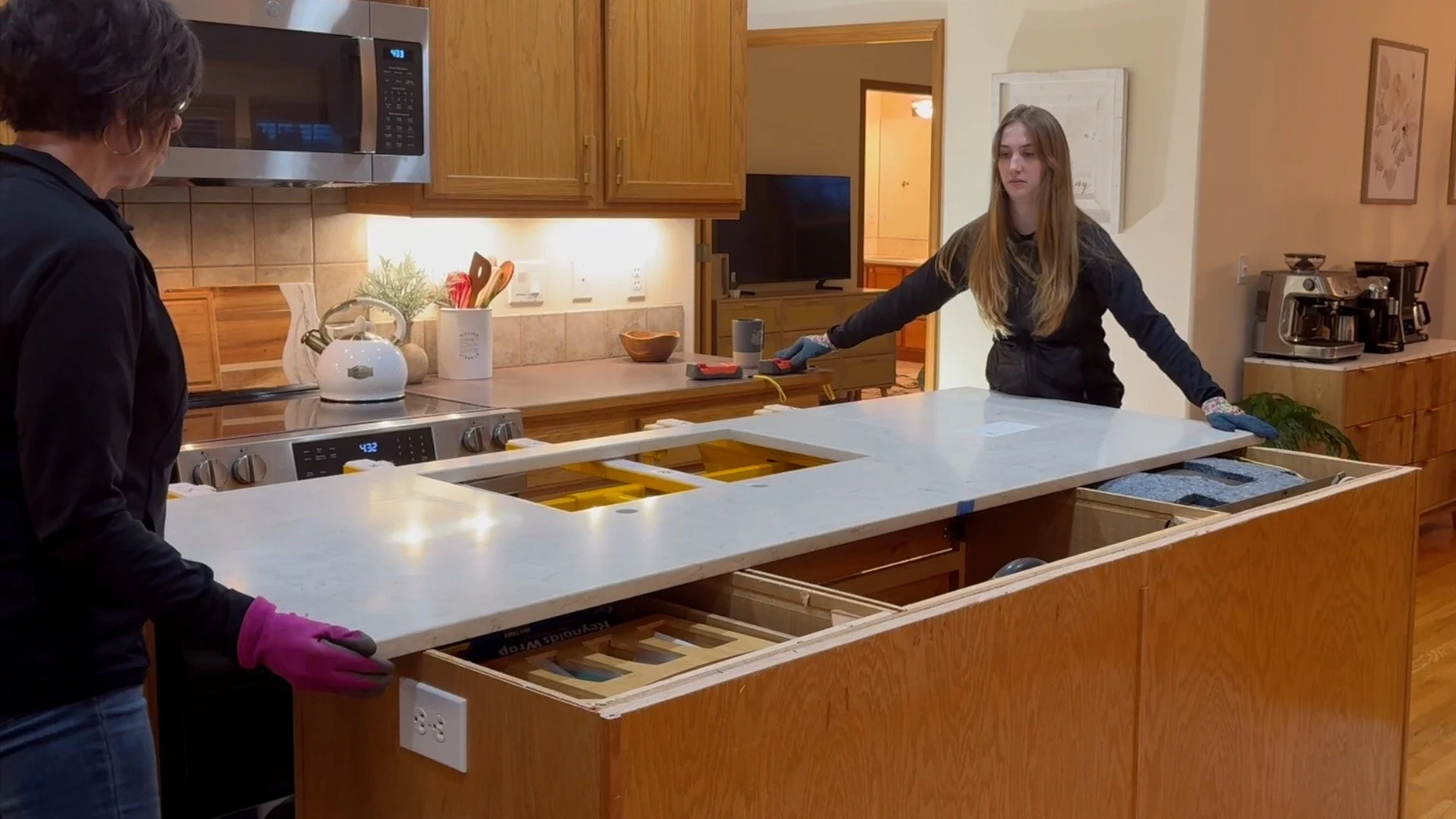
Diane and Julia complete a two-woman quartz island installation. Click the image to watch the installation.
The Real Labor Problem Isn’t Just Finding Installers
Every stone fabricator is feeling the pressure—and the broader construction market confirms it.
In the Associated General Contractors of America’s 2025 workforce survey, 92% of construction firms reported difficulty filling open positions. Nearly half said labor shortages had delayed projects. This is not a short-term recruiting problem; it is a capacity problem.
Meanwhile, the U.S. Bureau of Labor Statistics projects about 149,400 openings for construction laborers and helpers every year from 2024 through 2034. Many will not be new jobs. They will be openings created when people change occupations or leave the labor force—including retirement.
of contractors surveyed said they were having difficulty filling open positions in 2025.
AGC/NCCER workforce survey
projected annual openings for construction laborers and helpers, with many driven by transfers and labor-force exits.
U.S. Bureau of Labor Statistics
private-industry cases involving days away, restriction, or transfer were caused by overexertion, repetitive motion, and bodily conditions in 2023–2024.
U.S. Bureau of Labor Statistics
of skilled-trade workers in construction are women, even though roughly one million women work in construction overall.
U.S. Department of Commerce
Injury and Attrition Compound the Shortage
Construction recorded 2.2 injury and illness cases per 100 full-time workers in 2024; 0.9 cases per 100 involved days away from work. Across private industry, overexertion, repetitive motion, and bodily conditions produced the largest number of cases involving days away, restriction, or transfer during 2023–2024.
Those national statistics cover far more than countertop installation, but the lesson is directly relevant: work that depends on repeated heavy handling creates exposure. A single injury can remove a trained installer from the schedule. Years of accumulated strain can shorten a career. Either way, the shop loses capacity and knowledge that cannot be replaced overnight.
What If Your Team Could Install More—Without Simply Adding More Labor?
Advanced material-handling equipment is not a substitute for skill. It is a way to let skill—not brute strength—do more of the work. By reducing manual lifting and improving control, the right system can help a crew handle demanding installations with less physical strain.
- Reduce manual lifting during transport, rotation, and placement
- Improve crew efficiency and jobsite workflow
- Help reduce breakage, cabinet damage, and costly rework
- Lower exposure to lifting-related injuries and lost time
- Support longer, healthier careers for experienced installers
- Expand the range of people who can contribute successfully
This is not about replacing installers. It is about multiplying what trained installers can accomplish—and keeping them in the trade longer.
Removing the “Brute Strength” Barrier Can Open Doors for Women
Women remain dramatically underrepresented in construction’s skilled trades. The U.S. Department of Commerce reports that women make up less than 5% of skilled-trade workers in construction. That is an enormous pool of potential talent our industry has barely begun to reach.
Equipment alone will not solve recruitment or retention. Employers also need inclusive hiring, properly fitted protective equipment, training, mentorship, respectful jobsite cultures, and clear career paths. But modern material handling can remove one needless barrier: the assumption that success in installation depends primarily on upper-body strength.
When carts, cranes, vacuum lifters, and controlled tilting systems carry more of the load, the job becomes more about judgment, precision, planning, communication, and craftsmanship. Those are the qualities that make a great installer—regardless of gender.
The two-woman quartz island installation featured above shows what that premise looks like in practice: skilled installers using purpose-built equipment to control a large, valuable piece safely and professionally.
More Than a Decade of Helping Fabricators Work Smarter
For over 11 years, No Lift System, Inc. has designed and manufactured installation carts and crane systems in Oregon to help fabricators move heavy stone more safely and efficiently.
Fabricators around the world use No Lift System equipment to approach larger projects with greater control while helping protect the people who make their businesses successful.
Let’s Build the Right Solution for Your Crew
Every fabrication shop is different. Your materials, vehicles, crew size, project mix, and installation challenges all affect which tools will provide the most value.
A No Lift System specialist will spend 15 minutes learning about your operation and the problems you most want to solve.
Sources
- Associated General Contractors of America and NCCER, 2025 Workforce Survey.
- U.S. Bureau of Labor Statistics, Construction Laborers and Helpers, 2024–2034 projections.
- U.S. Bureau of Labor Statistics, Employer-Reported Workplace Injuries and Illnesses, 2023–2024.
- U.S. Bureau of Labor Statistics, Construction Industry Injury and Illness Data, 2024.
- U.S. Department of Commerce, Harnessing the Talents of Women in the Growing Trades Workforce.
Industry-wide statistics provide context and should not be read as countertop-installation-specific incidence rates.
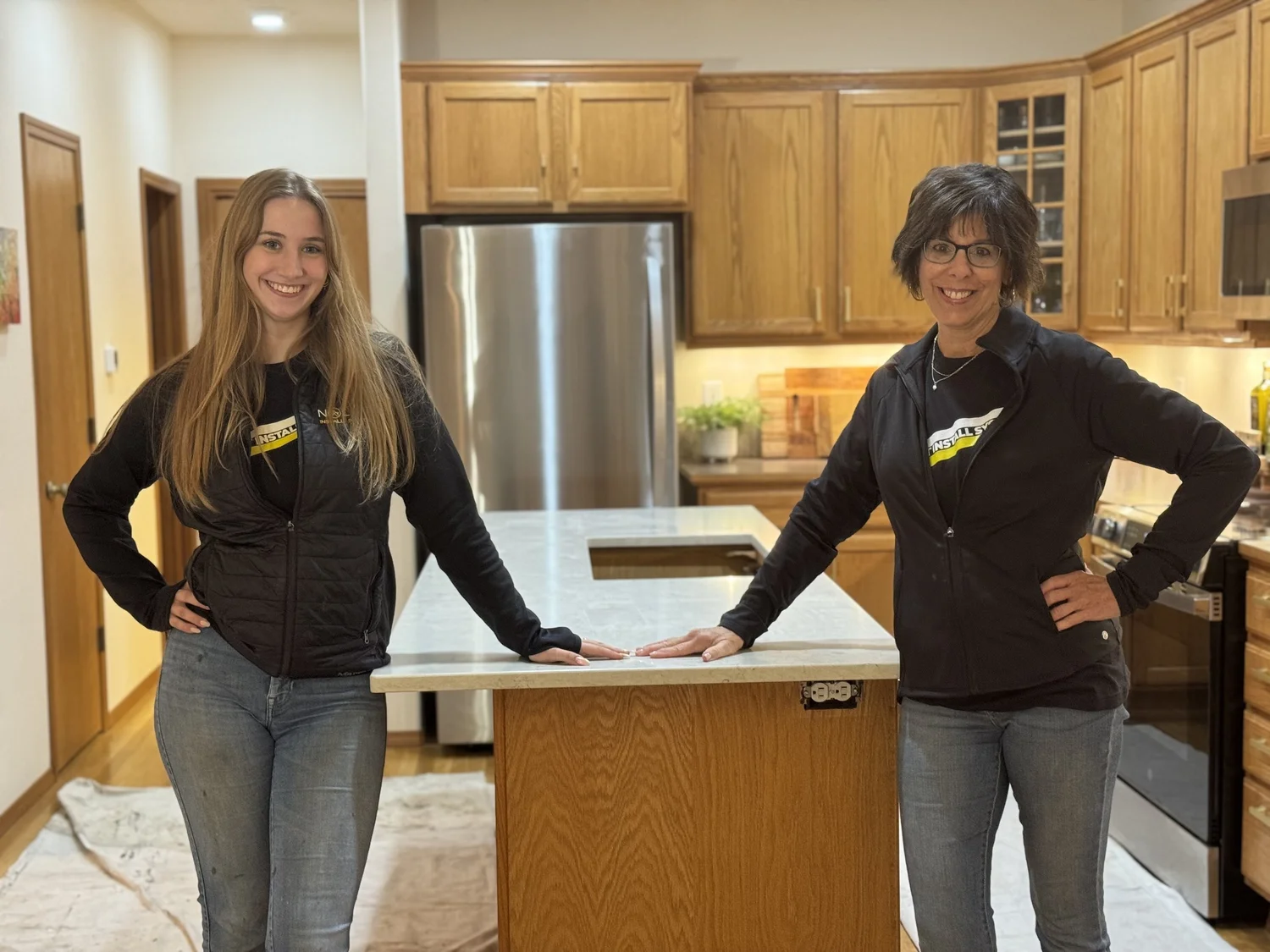
Two novice installers completed their first quartz island countertop installation using the No Lift System Power Tilt installation cart. Click the image to watch the full installation video.
Ready to See What’s Possible?
Invest 15 minutes and discover how the right equipment can help your team work smarter, reduce physical strain, and build a more sustainable installation operation.
Book My 15-Minute Discovery Call